Published: Sep 25, 2026
Updated: Sep 25, 2026
| Name | Anonymous |
| Age | In their 40s |
| Concern | The crown and whorl have become more noticeable than before, and the hair has lost volume overall |
| What he asked for | Wants the whorl covered naturally, with the sides short and neat |
| Everyday styling | Uses wax and hair spray, sweeping the hair in the direction that makes the whorl less noticeable |
Covering a thinning crown and whorl naturally by adjusting the flow and the length
Our client this time was a man in his 40s. He was concerned that his whorl had recently become more noticeable, and that his hair had lost volume overall.
He had already been styling it himself, adjusting the flow and looking for the direction that made the whorl less noticeable.
When we checked in the consultation, the flow he was already using worked very well. There was no need to force a change of direction.
On the other hand, about a month and a half had passed since his last cut, and there was a little extra length on top and around the whorl.
This time we kept the flow that was already working, took the sides short and neat, and left only the length needed on top to give it lift.
What the consultation showed: why it is better not to leave it too long

He had a sense that growing his hair out would make it lie flat, so for the past few years he had not let it get very long and had kept to shorter styles.
Around his whorl as it is now, some length is needed to cover the areas that tend to look thin.
But once it grows beyond the length needed for cover, the hair moves around more easily.
In fact, he had noticed that when the wind blew hard, his hair moved all in one piece.
Hair that gets too long can weigh the roots down, and when the wind moves it, the thinner areas may show more easily.
The point this time was not to grow it long to hide the thinning, but to keep only the length needed for cover.
The cut: tighten the sides and give the top lift
① Cut the sides well short for a clean look
He said he usually keeps the sides on the short side.
This time, too, we kept the sides short and neat.
If the sides have too much volume, the top looks lower by comparison, which can draw attention to the lack of volume at the crown.
Keeping the width compact creates a difference in height with the top, which makes it easier to give the crown natural height.
② Keep the length needed around the whorl
When covering a thinning crown and whorl, shorter is not always better.
To let hair fall naturally over the areas that tend to look thin, some length is needed.
This time we kept the length needed for cover and adjusted only the parts that had grown too long and were moving around.
What matters is creating a length that overlaps naturally, so it does not look like hair has been dragged over from somewhere else.
③ Do not change a flow that already works
He had changed the direction he swept his hair from before, and had found for himself a direction that made the whorl less noticeable.
When we checked, sweeping it in his current direction did cover the area around the whorl naturally.
So this time we did not force a change of direction.
We worked with his current flow and adjusted the length so that shape is easier to create.

In a cut for thinning hair, where to keep length matters as much as where to cut short.
Around the whorl in particular, even a small difference in length changes how the hair overlaps and how much scalp shows.

The point is not growing it to hide, but keeping the length you need
Once thinning starts to bother them, many people wonder whether they should grow their hair and hide the thinner areas.
But when the top gets too long, the weight of the hair can make the roots lie flat.
And when the wind blows, long hair can move in one piece, so scalp that is usually covered may suddenly show.
Our client, too, was bothered that even when styled with wax and spray, the wind moved all of his hair.
Keep length where it is needed and cut short where it is not. That contrast makes it easier to cover the whorl naturally and give the top lift at the same time.
Before and after: natural lift on top that works with the flow
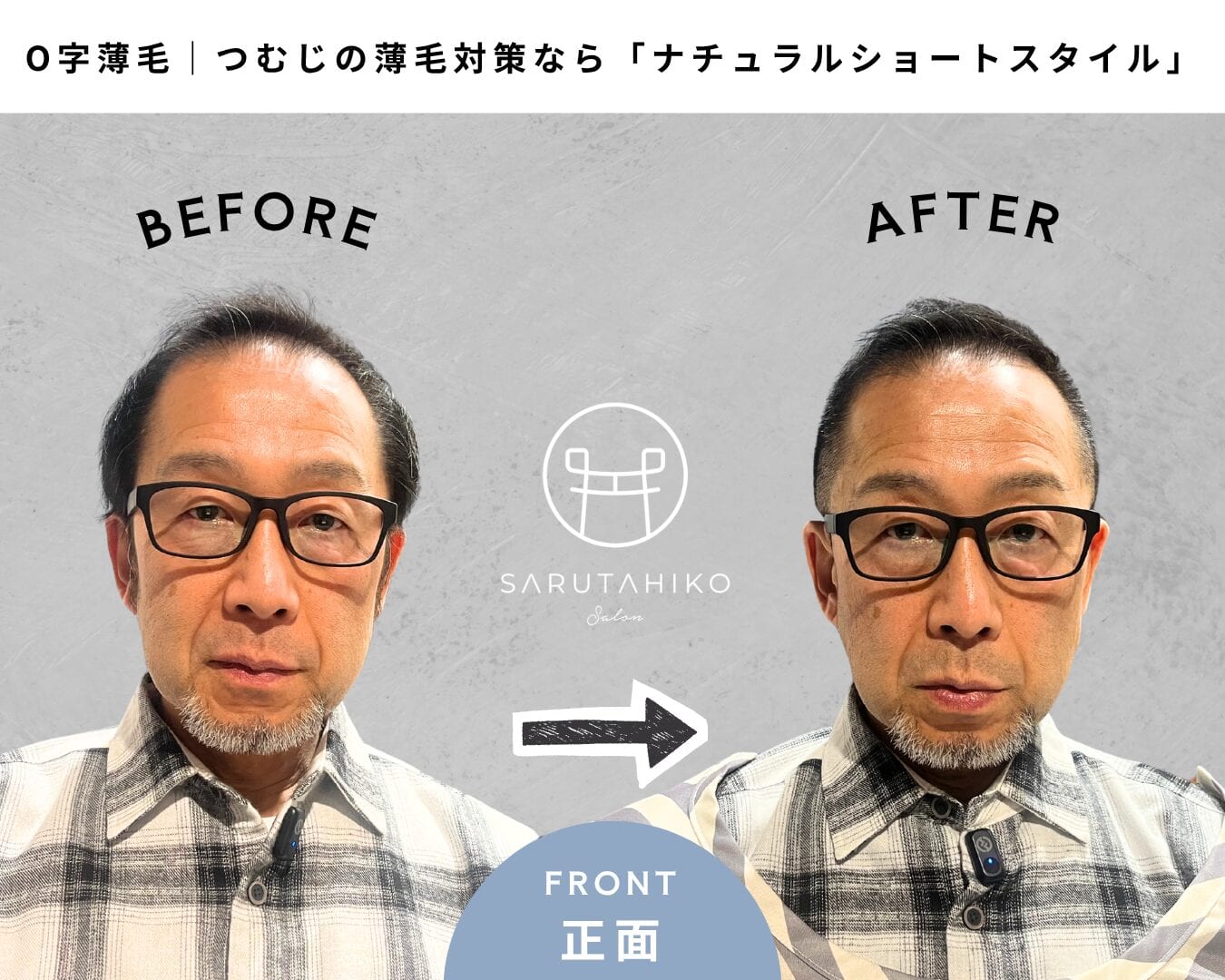
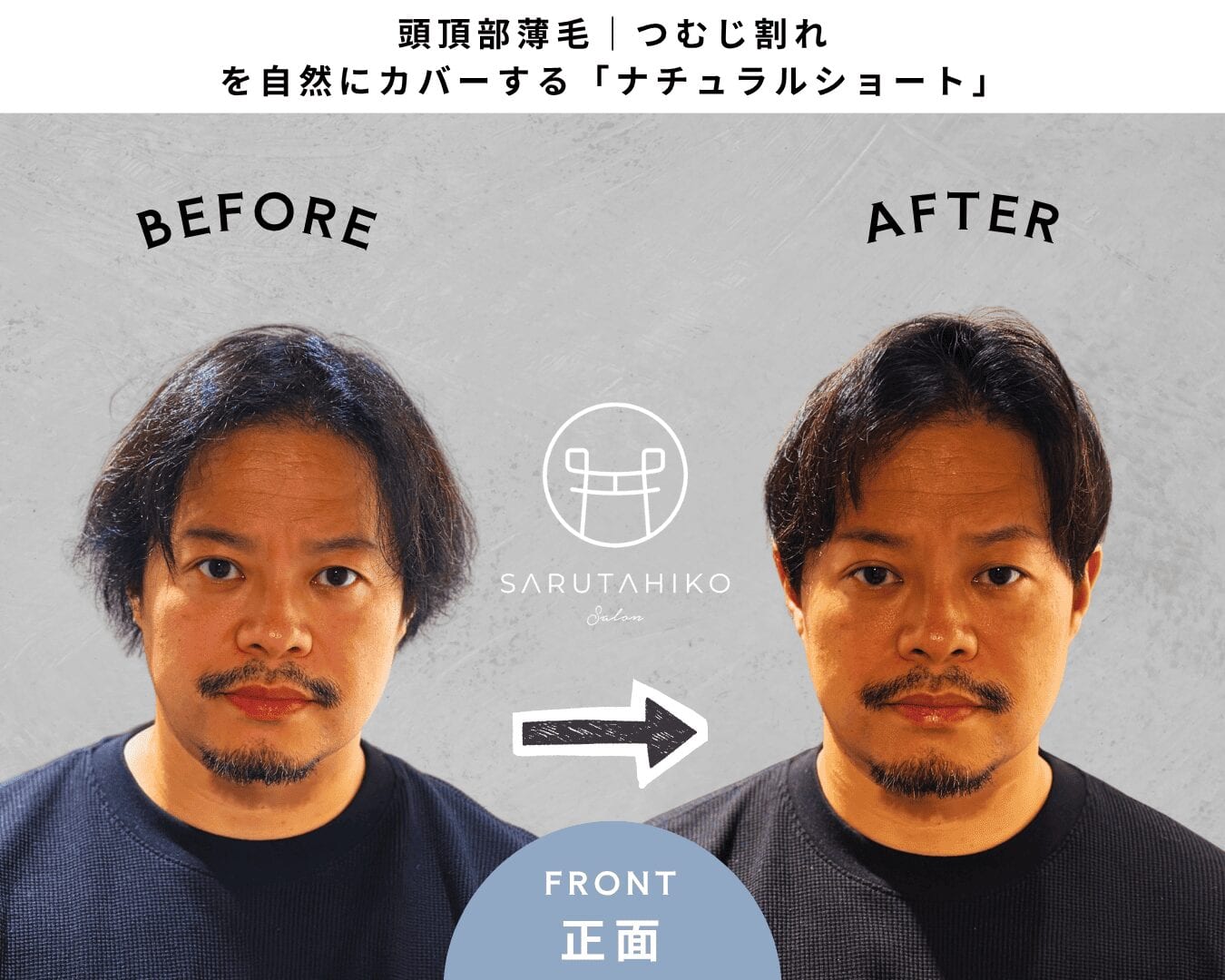
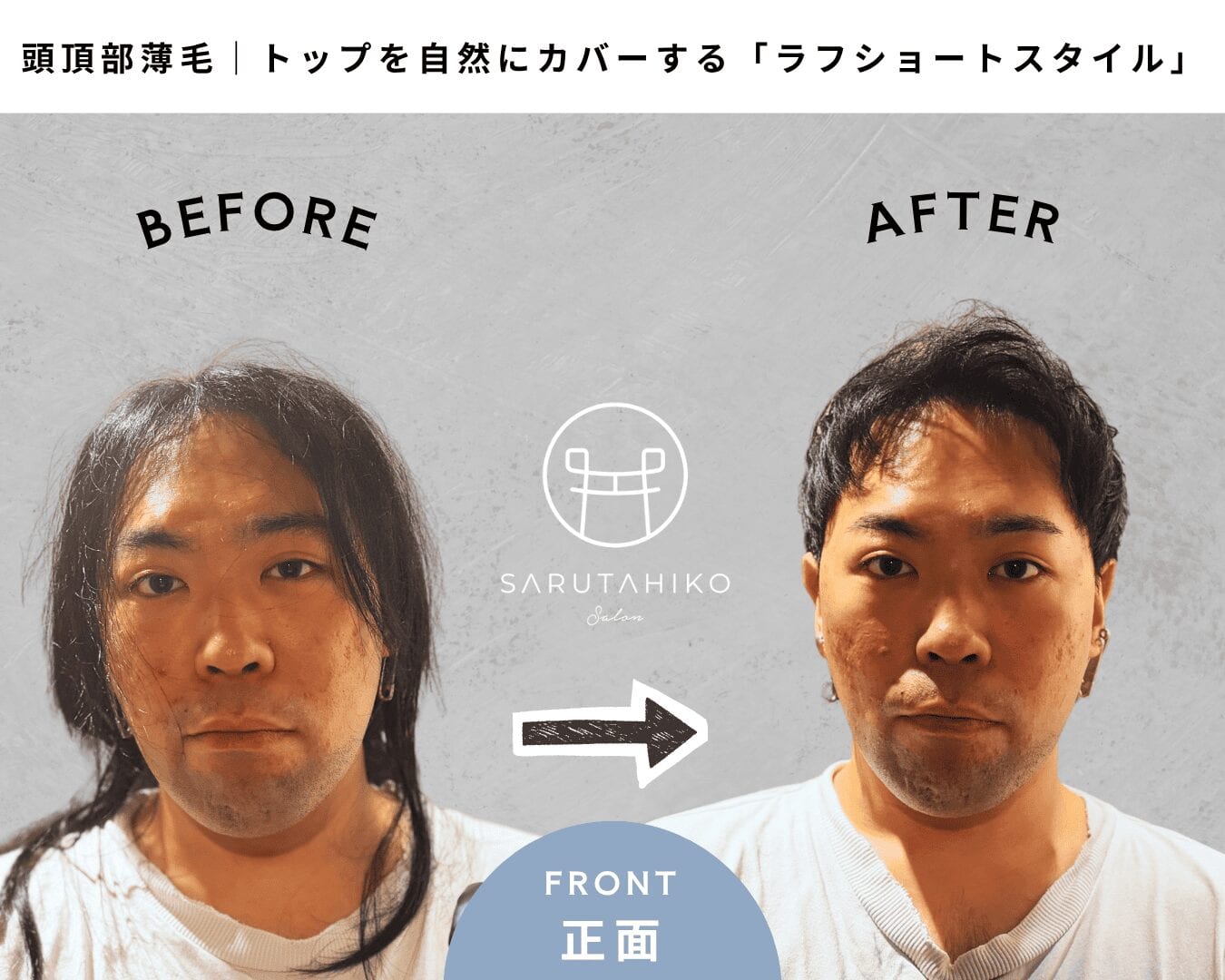
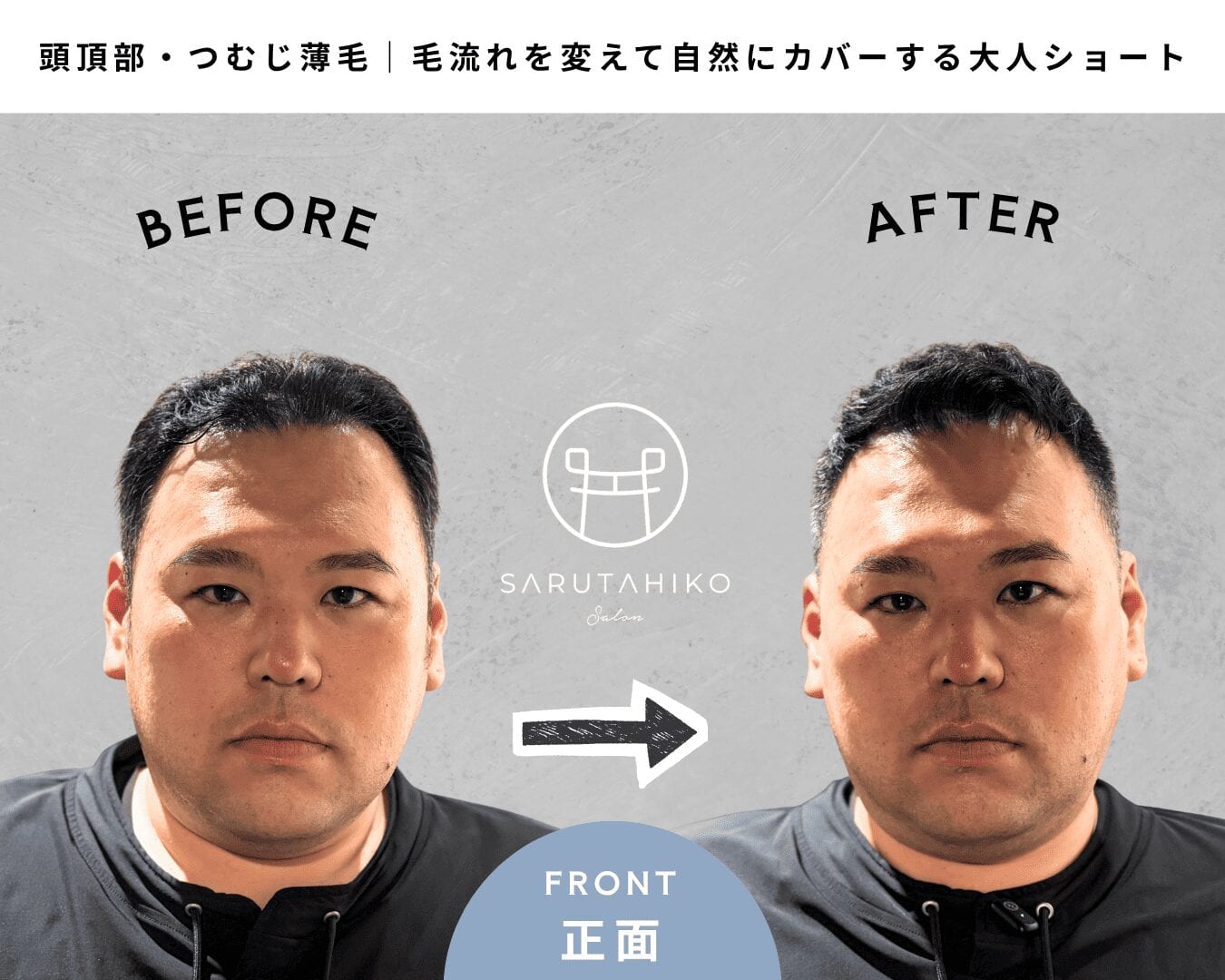
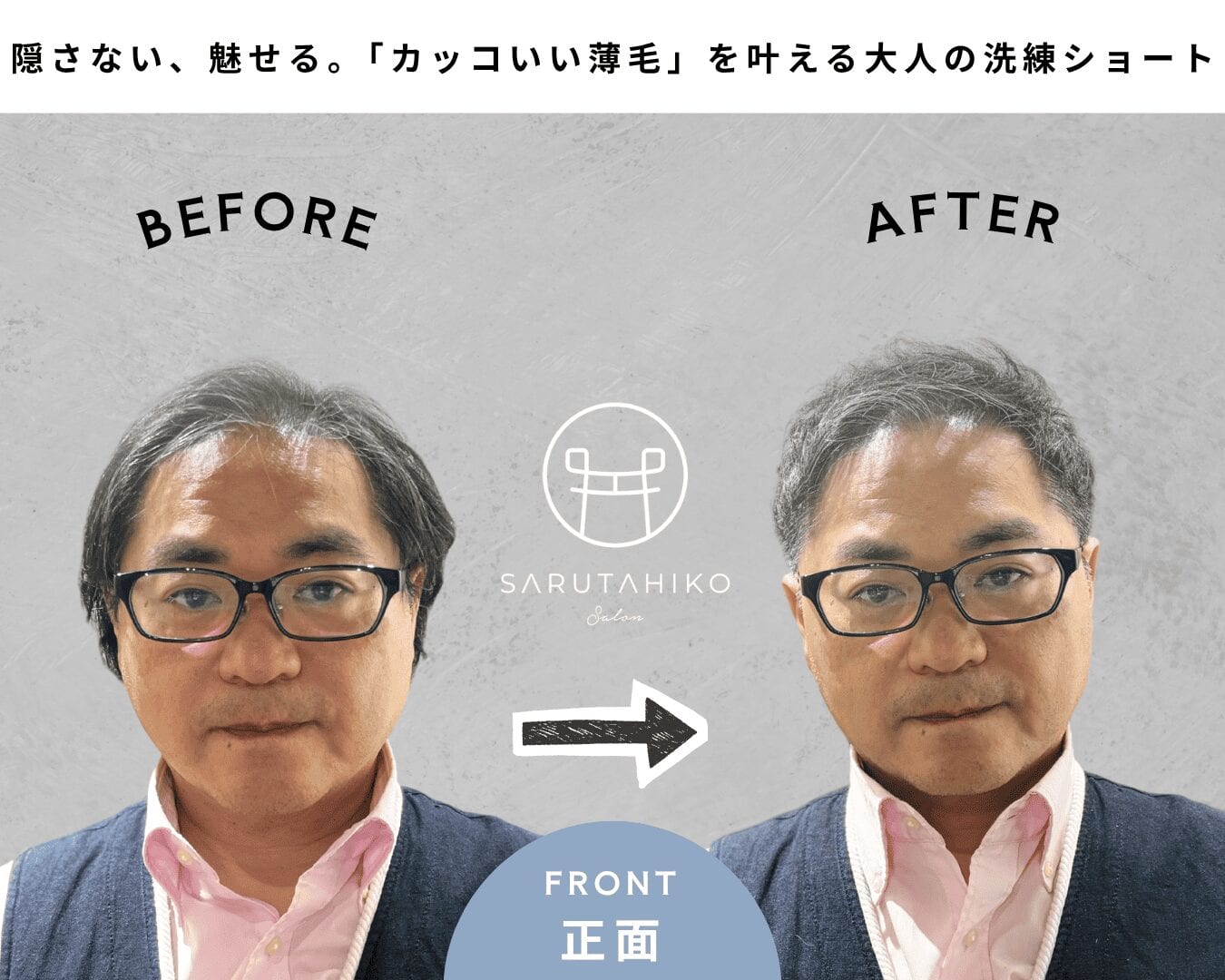
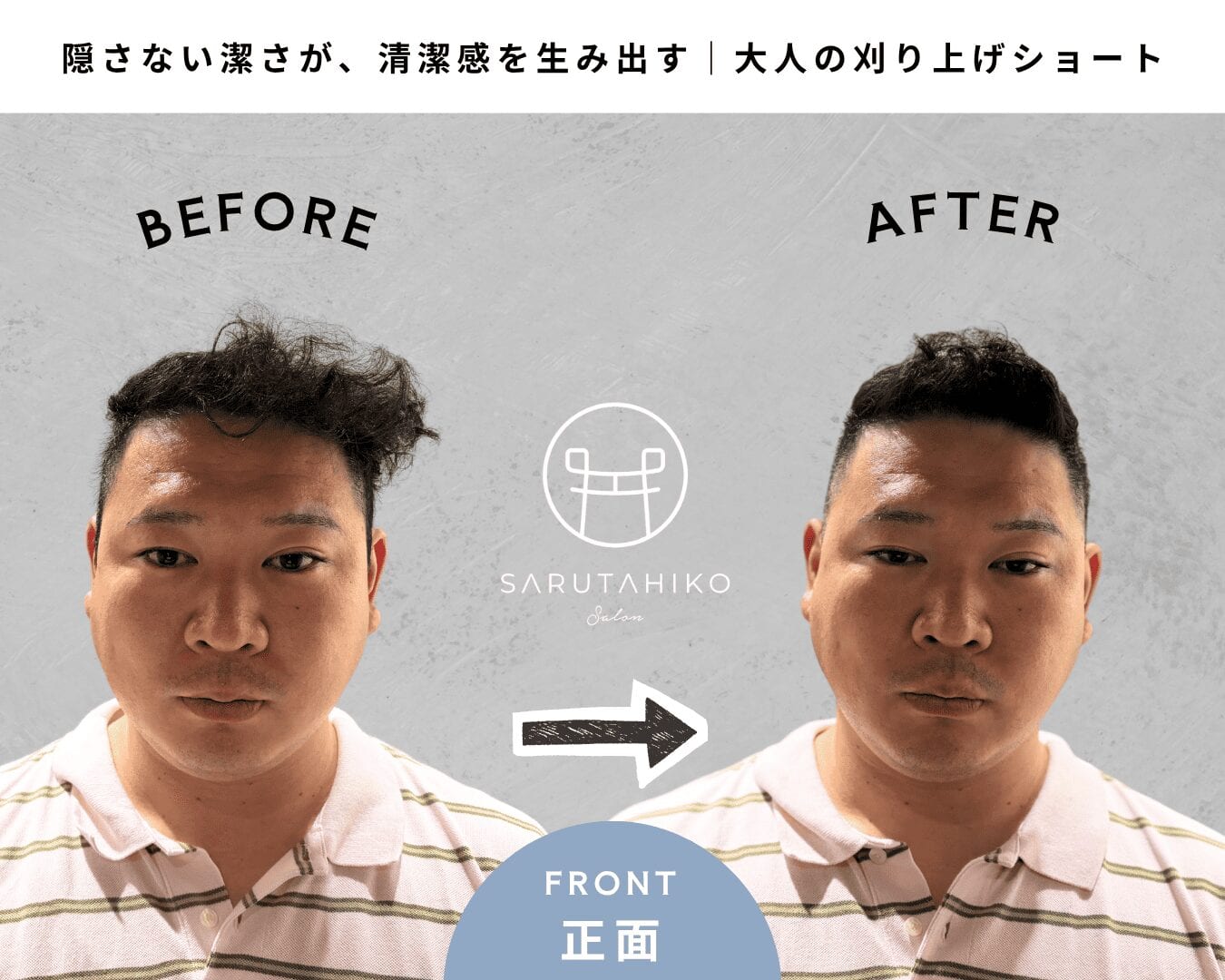
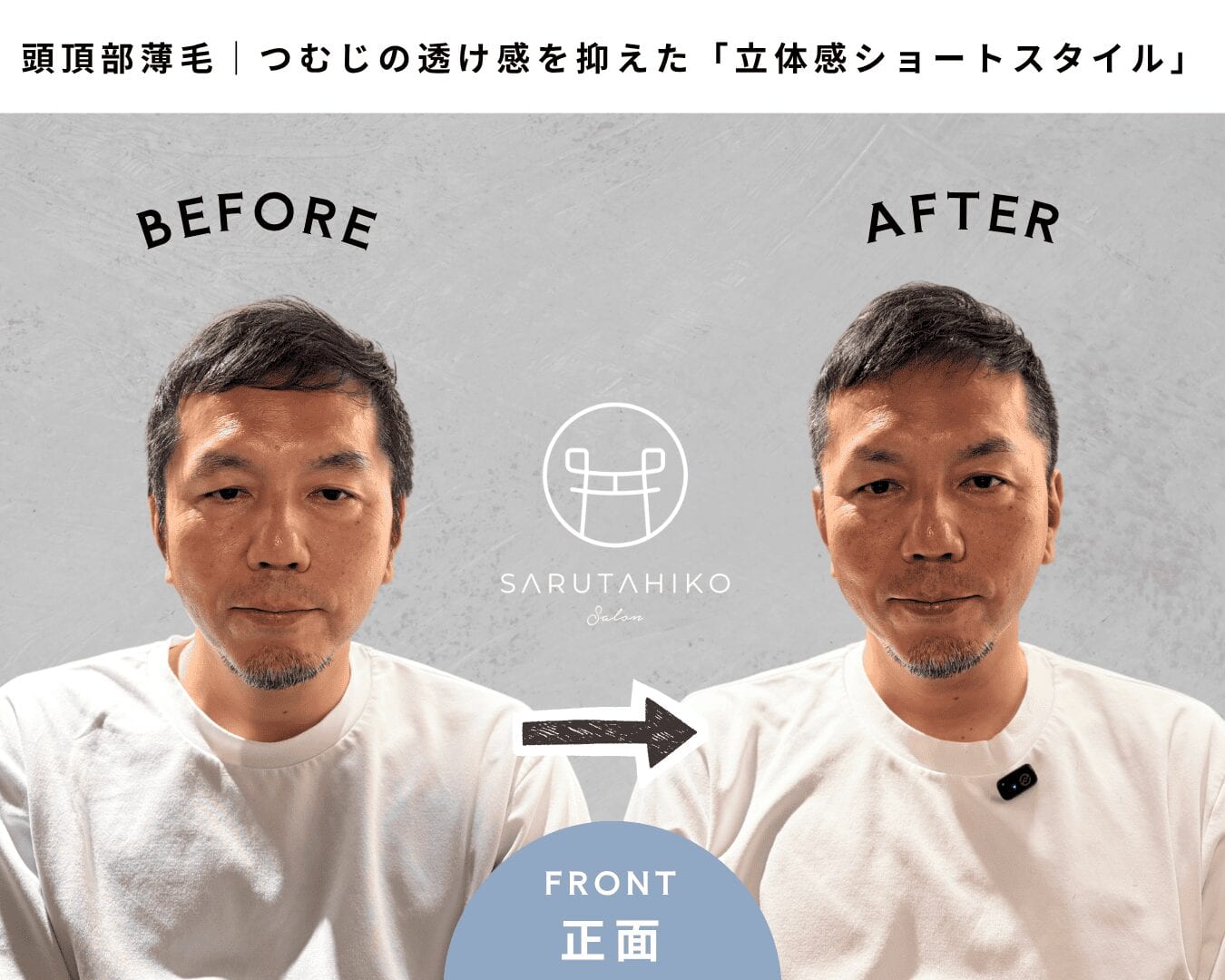
Before the cut, about a month and a half had passed since his last cut, and the hair had grown long, especially around the whorl and on top.
He said it is easy to style for about three weeks, but once a month has passed, the length around the whorl starts to bother him.

After the cut, the sides are neat and there is clear contrast with the top.
Around the whorl, we kept the flow he had already been using.
Taking off the extra length lets the roots lift more easily, so the top has natural height and lift.
Checking the finish from four angles

From the front, the compact sides bring out the height on top naturally. It does not look like the thinning is being forced out of sight; it simply reads as a clean short cut.
.

Keeping the sides short holds back the width, giving a silhouette that runs naturally from the top to the back of the head.
.

From the side, too, the top has natural height. Because long hair is not being forced over the thinner areas, it looks like an ordinary short cut, which is part of the point.
.

The most important area this time was around the whorl.
We worked with the flow he uses every day and adjusted it so the hair falls naturally over the areas that tend to look thin.
Rather than forcing the whorl alone out of sight, we shaped it to blend with the hair around it, so it looks natural.
How to use a dryer at home
With this style, rather than shaping it with wax alone, what matters is building lift from the roots with a dryer.
- In the morning, wet all of your hair thoroughly
- Towel off the excess water
- Work a volumizing mist product through all of the hair
- Dry the hair while sweeping it in the direction you usually use to cover the whorl
- On top, aim the dryer so it lifts the roots
- Once the overall shape is in place, finish lightly with wax or similar
Once his hair had grown out, he too would usually wet it in the morning and build the flow with a dryer.
So there is no need for him to change his styling routine much.
Lifting the roots with the dryer first and getting the style almost finished also means you can use less product.
Powder products, which do not go greasy, also suit thinning hair
Here we used a mist product applied to the hair while still wet after towel-drying, then dried in. It makes volume easier to build.
Working the mist through all of the hair before drying lets the product reach the roots too, which makes lift easier to build.
A lot of ordinary wax can make the hair clump, so the scalp shows more easily through the gaps.
Some powder products build volume while keeping stickiness down, which makes them easy to use if volume at the crown is a concern.
Build the shape first with the mist and the dryer, then use a little wax if needed.
A light hair spray at the end makes it easier to keep the wind from undoing the style.
"The volume is completely different," he said of the finish
At the finish, seeing his hair with the volumizing mist in, he said:
"The volume really is completely different."
"It does not bother me at all."
That was his reaction.
We did not change the style itself dramatically.
The length at the sides, the length around the whorl, the flow, the way the dryer is used.
We kept what already suited him and adjusted, little by little, what had become hard to manage. That changed how the crown looks, naturally.
Growing it long to hide it is not the only answer for a thinning crown and whorl
Plenty of people, once the crown or the whorl starts to bother them, wonder whether growing the hair long to hide it would be better.
Of course, keeping the length you need for cover is important.
But hair that is too long tends to lie flat under its own weight, and when the wind undoes it, the thinner areas may show more easily.
What matters is not the pattern of thinning alone, but designing the cut around
- how thick the hair is
- how much of it is left
- where the whorl sits
- the natural flow of the hair
- the volume at the sides
- length on top
- how the hair moves in the wind
- how you usually style it
all of it.
With a thinning crown and whorl, rather than cutting everything short or growing everything long, separating where to cut short from where to keep length makes natural cover easier.
▶ Styles for thinning at the crown (O-shape) (Page in Japanese)
▶ Browse styles by pattern of thinning (Page in Japanese)
What a barbershop for men with thinning hair can offer
At SARUTAHIKO we do not judge by the pattern alone — M-shape, O-shape, horseshoe. We look at your hair, how it grows, the shape of your head and how you live, and propose from there.
Not simply cutting it short or growing it to hide anything, but
- where to cut short
- where to leave length
- Where to add volume
- which way to sweep the hair
- how to recreate it at home
- how it will look as it grows out
are all part of the cut.
If your whorl has started to show more lately, your crown has lost volume, or the thinner areas will not stay covered when you style it yourself, come and talk to us.
FAQs
- If my crown and whorl are thin, does longer hair hide them better?
- Longer is not always better. It is good to keep the length you need for cover, but if it gets too long, the weight can make the roots lie flat, or the wind can move it a lot. What matters is deciding the length you need by looking at the thinner areas, how much hair there is, where the whorl sits and how the hair flows.
- Will changing the flow make thinning at the whorl less noticeable?
- It varies from person to person. This client's own way of sweeping his hair was already covering the whorl naturally. In that case, working with the current flow rather than forcing a new direction can make styling easier and the finish more natural.
- I feel wax makes the thinning at my crown more obvious.
- A lot of oily wax can make the hair clump, so the scalp shows more easily through the gaps. We recommend building lift at the roots with a dryer first, then using only as much powder mist or dry styling product as you need.
- What can I do if the wind messes up my style?
- If the top gets too long, the wind can move the hair a lot, all in one piece. Keep only the length needed for cover, build the shape from the roots with a dryer, and finish with a light hair spray. That makes it easier to keep the style in place.
- How often should I get a cut to keep it easy to style?
- This client finds it easy to style for about three weeks, and once a month has passed, the length around the whorl starts to bother him. Hair type and growth speed vary from person to person, but a good guide is when the area around the whorl starts moving around more, or styling in the morning starts taking longer.