Published: Jun 2, 2026
Updated: Jun 2, 2026
| Name | Anonymous (Mr H) |
| Age | In their 60s |
| Concern | Concerned about the scalp showing at the front and a thinning hairline |
| Everyday styling | Wears a hat almost whenever he goes out |
| Other | Wants a natural, clean style he can wear without relying on a hat |
"I cannot go outside without a hat any more."
Our guest this time was a man in his 60s. His workplace allowed hats, so apart from when he was at home he wore one almost all the time.
What bothered him most was the scalp showing through, from the temples across to the crown.
"Will it just keep getting more obvious?" "If I cut it short, will it stand out even more?"
Caught between those worries, he had stopped knowing what to do.
We start by listening to what concerns you about your hair.

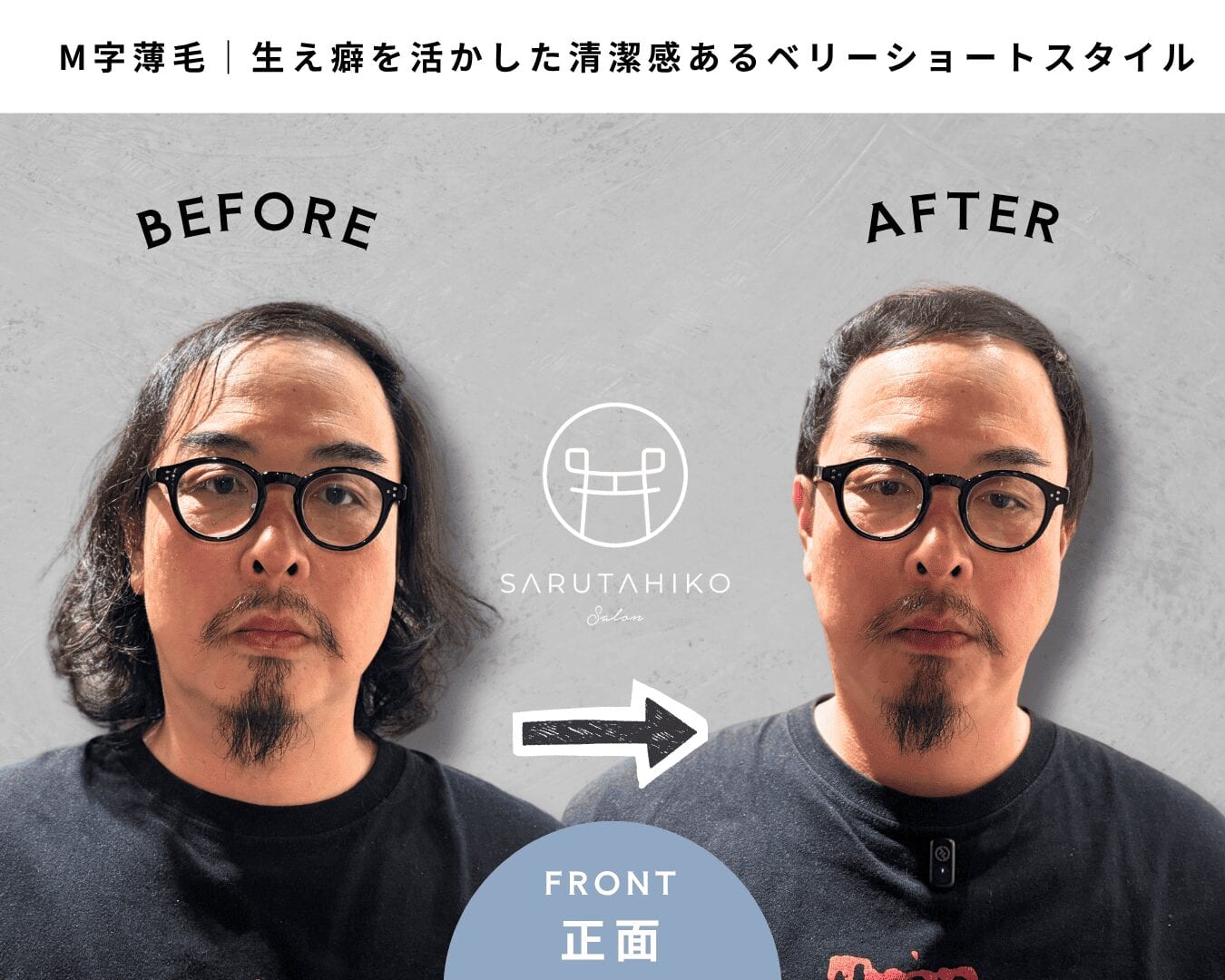
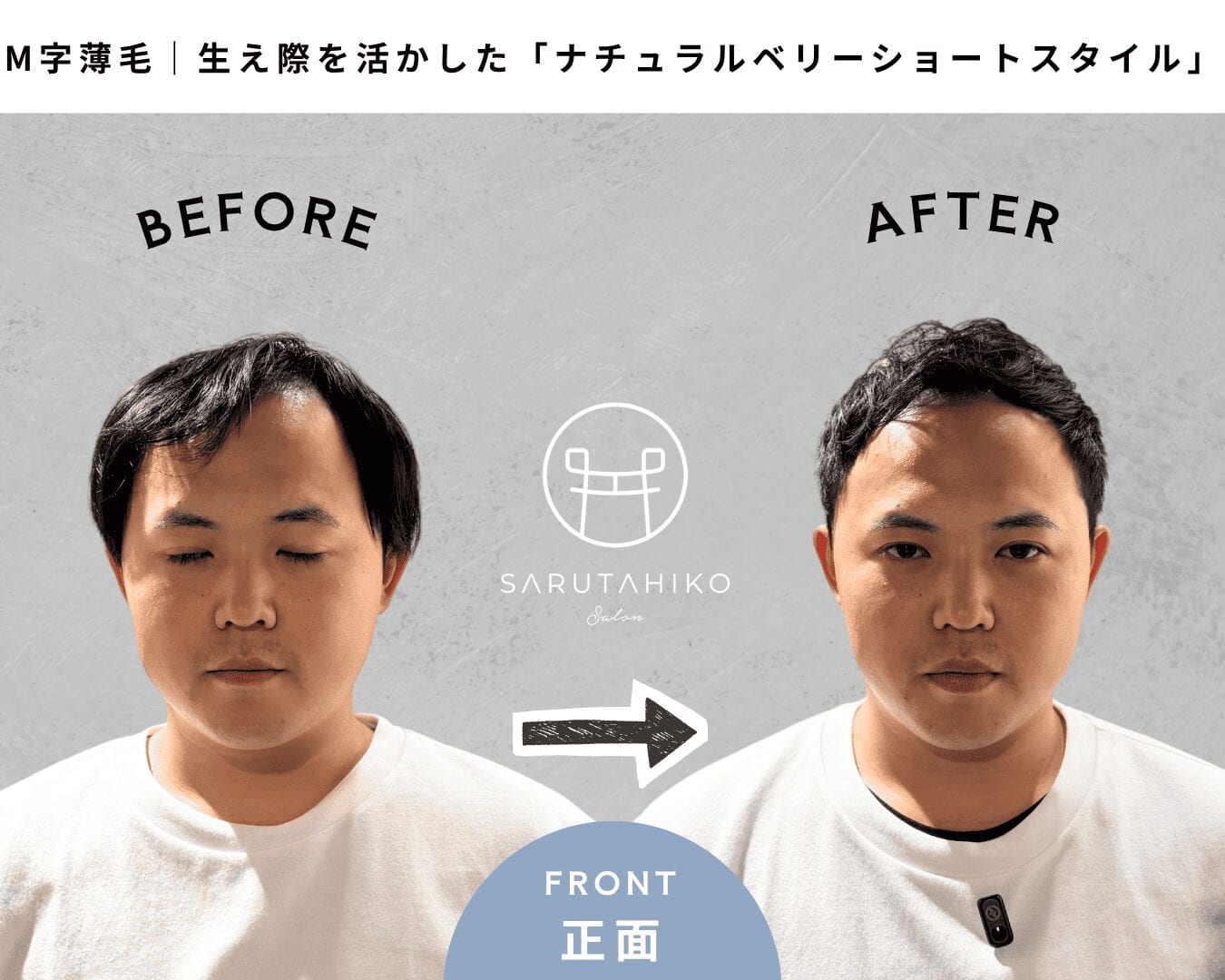
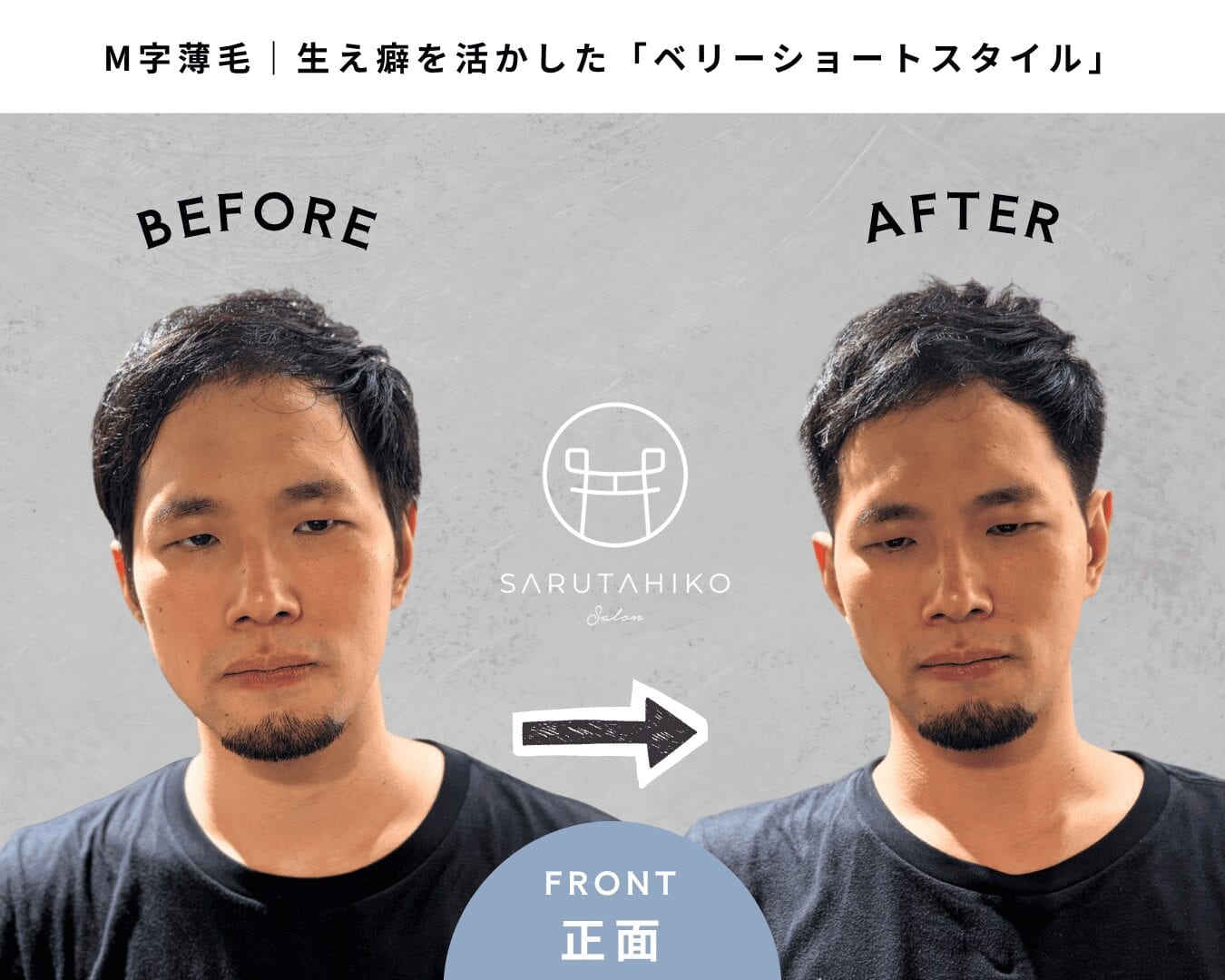
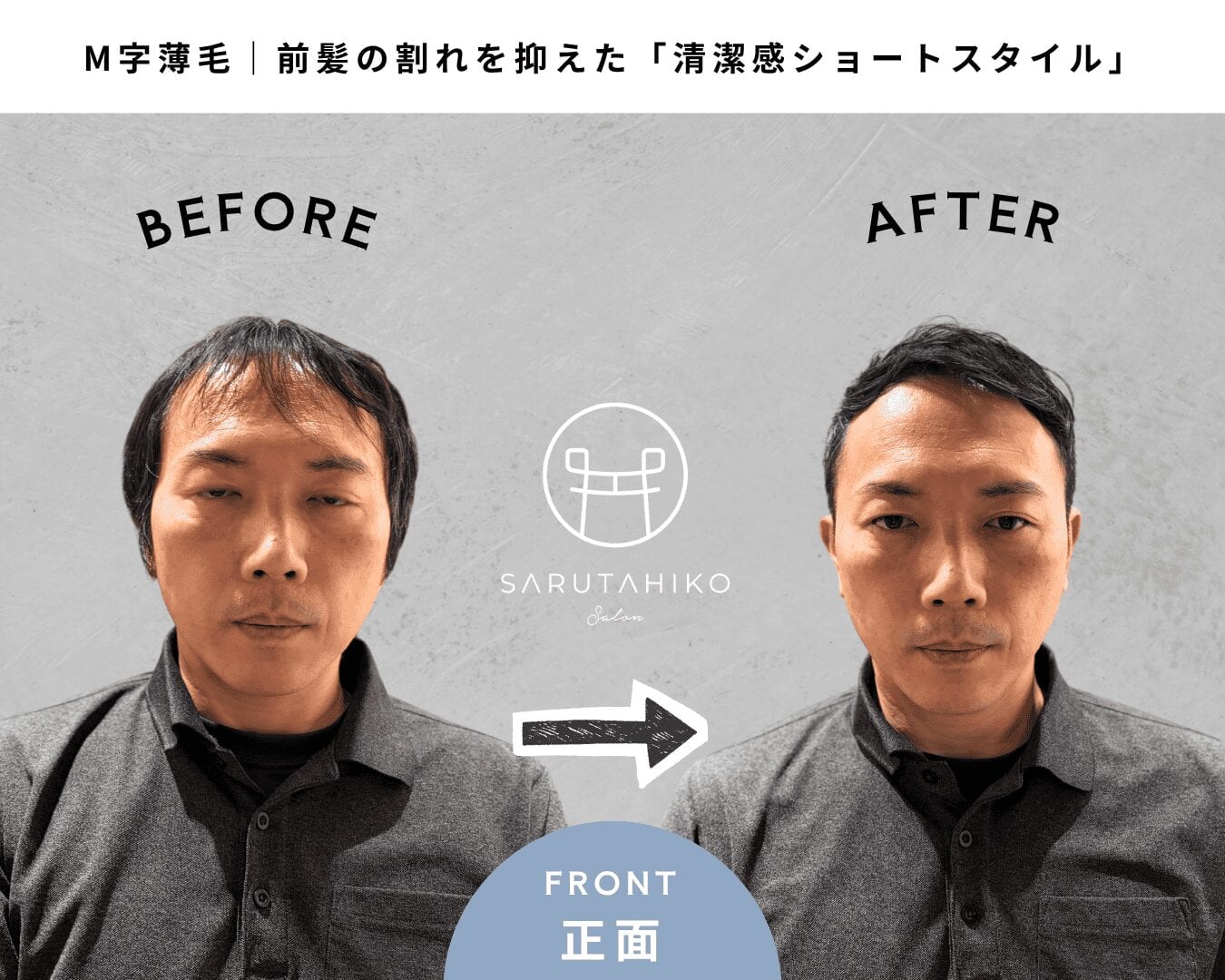
After hearing all this, we designed the cut to blend the thinning in rather than hide it.
Trying to cover only the thin areas tends to leave an unnatural heaviness.
So we did three things:
· Adjust the weight on the sides carefully · Keep natural height on top · Shape the whole silhouette with dimension
Working from those three, we built a shape that spreads the eye naturally.
Key points of the cut

The key this time was keeping movement on top while cleaning up the sides.
Holding down the volume at the sides lets the hair on top stand up naturally, so the border with the M-shaped area blends more easily.
Drying from the back towards the front also settles the flow, so the hair reads as denser.
If you add color, keep it soft rather than bright:
· Beige ash · Silver ash
Calm, cool-toned shades like these work well.
It is a short cut that works in most situations.
The result

Looking at the finished cut, he told us:
"I think I can manage without a hat."
We were glad to hear it.
Thinning at the temples and the front is not something you can cover simply by leaving the hair long.
By reading the head shape, the direction of growth and the balance of density, and building natural dimension, the finish can look clean.
If a hat has become something you cannot go without, please come and talk to us.
What a barbershop for thinning hair can offer
At SARUTAHIKO we work from the characteristics of each pattern — M-shape, O-shape, horseshoe (U-shape) — and build the style from there.
Rather than simply cutting it short or covering it up, we look at
- Where to add volume
- Where to keep it tight
- What to show
- What to soften naturally
are part of the plan as well.
We also cover more than the cut itself:
- How to style it
- Choosing a wax
- How to use a dryer
- How it grows out
and propose the style on that basis.
"I do not know what would suit me." "I want to go short but I am not sure." "It was hard to bring this up at a salon."
If any of this sounds familiar, please feel free to talk to us.


.


.

.

"Apart from at home, I had a hat on the whole time." There are styles that suit thinning hair#shorts

FAQs
- If the scalp shows at the front, will cutting it short make it more obvious?
- Not necessarily. Leaving length to cover it often creates an unnatural heaviness that makes the thinning stand out more. Adjusting the weight at the sides to match the head shape and hair flow, and giving the top natural height, leads to a clean finish.
- Does wearing a hat all the time make thinning worse?
- A hat by itself does not generally cause thinning. That said, heat and sweat can worsen the condition of the scalp, and covering your hair with a hat tends to mean you style it less, which can make the concern feel bigger. Finding a style that suits you can help you stop relying on a hat.
- What styling works for thinning at the front?
- Drying from back to front to settle the flow works well. Giving the top a natural lift brings a sense of density to the front. Finish with a small amount of light dry wax to hold the shape.
- Does coloring make thinning less noticeable?
- It can soften the impression. Calm, cool-toned shades such as beige ash or silver ash reduce the contrast with the scalp and tend to blend more naturally. A refined, muted color usually works better than a bright one.
- How often should I come in?
- To keep the silhouette clean, about once every three to five weeks works well. As volume builds at the sides the diamond shape starts to lose its line, so regular adjustment keeps the balance natural.