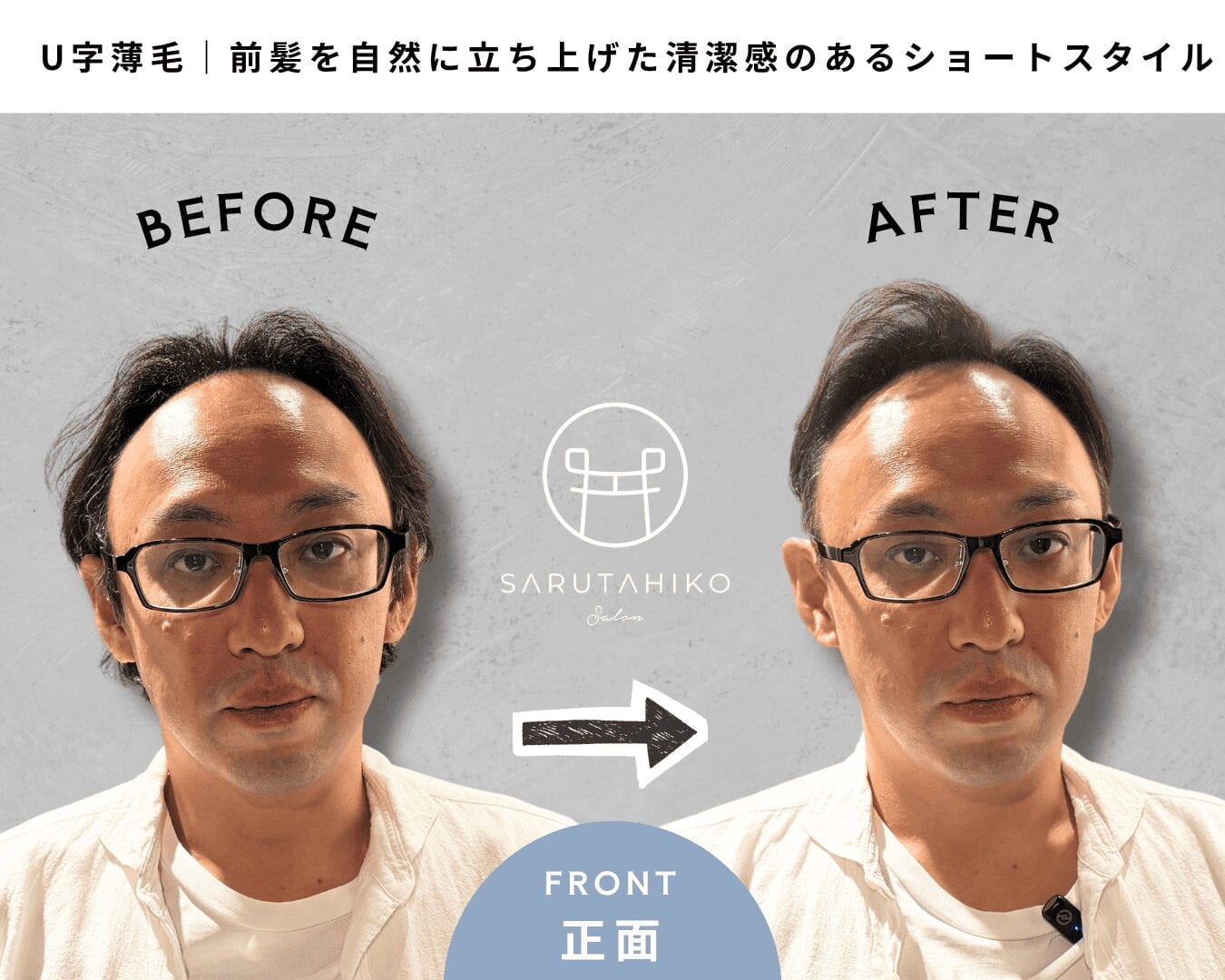
Published: Aug 25, 2026
Updated: Aug 26, 2026
| Name | A YouTube creator |
| Age | 34 |
| Type of thinning | Horseshoe pattern; one month after a hair transplant (shock loss, and a difference in density between the grafts and the existing hair) |
| Everyday styling | The scalp is delicate and he is afraid to touch it; unsure how to style or cut it |
| Other | Wants a natural, clean, good-looking style that puts no strain on the transplanted area |
"One month after the transplant. Shock loss has thrown off the balance and I do not know how to cut it."
That was the worry that broughta hugely popular YouTube creator to SARUTAHIKO.

He has the horseshoe pattern, where the thinning runs from the hairline through to the crown,and he was about a month on from a hair transplant. At this stage the grafts and the hair around them temporarily fall out — the phase known asshock loss.
At this point there is a marked gap between the existing hair, which keeps growing, and the thinned-out graft area, and many people hit a wall:"nothing I do with it works", "I am afraid to touch my scalp so I just let it grow".
The consultation: checking redness, scabbing and how the grafts are settling
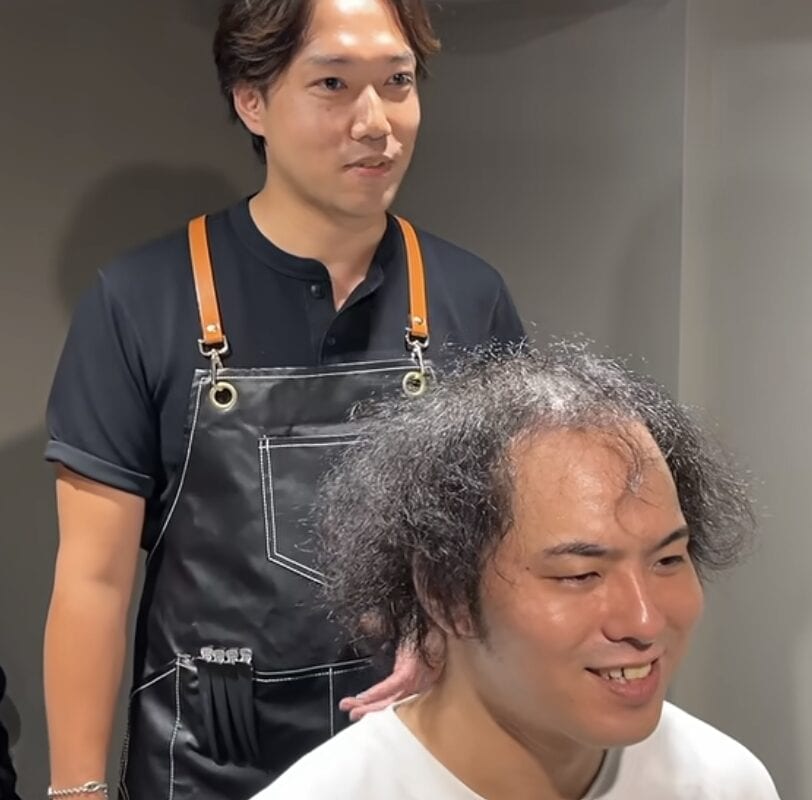
We start by going through the state of the scalp after surgery and what the clinic has cleared him for.
A month on, his surgeon had cleared him for a cut, but he still had concerns:"the graft area is still delicate and I am afraid to touch it", "there is some itching and small red spots on the back of my head".
Three things people run into a month after a transplant
- Uneven density at the fringe and hairline from shock loss:Hair falls out before the grafts settle, so the gaps show.
- A delicate scalp and worry about washing it:Washing too gently lets oil and dirt build up, which can cause problems of its own.
- Existing hair left to grow, especially at the sides and back:Protecting the graft area lets the surrounding hair puff out, which makes the thinning stand out more.
At an ordinary salon you may be turned away for lack of knowledge, or handled roughly enough to worry you.At SARUTAHIKO we take the worries of this delicate period seriously and work safety first.
What the cut had to do: a gradation of density, and a mullet
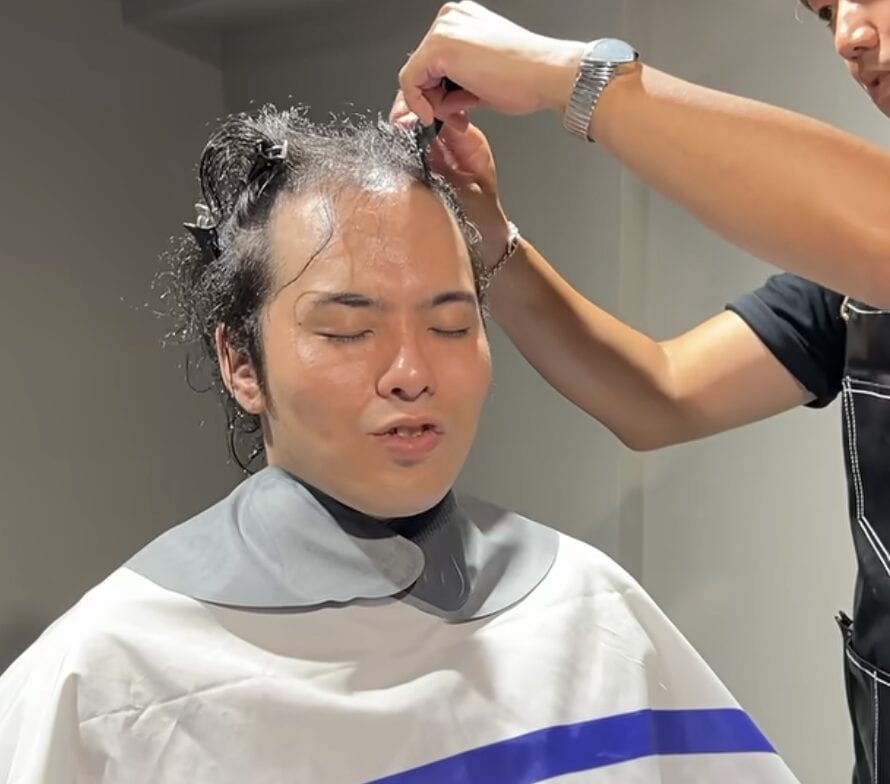
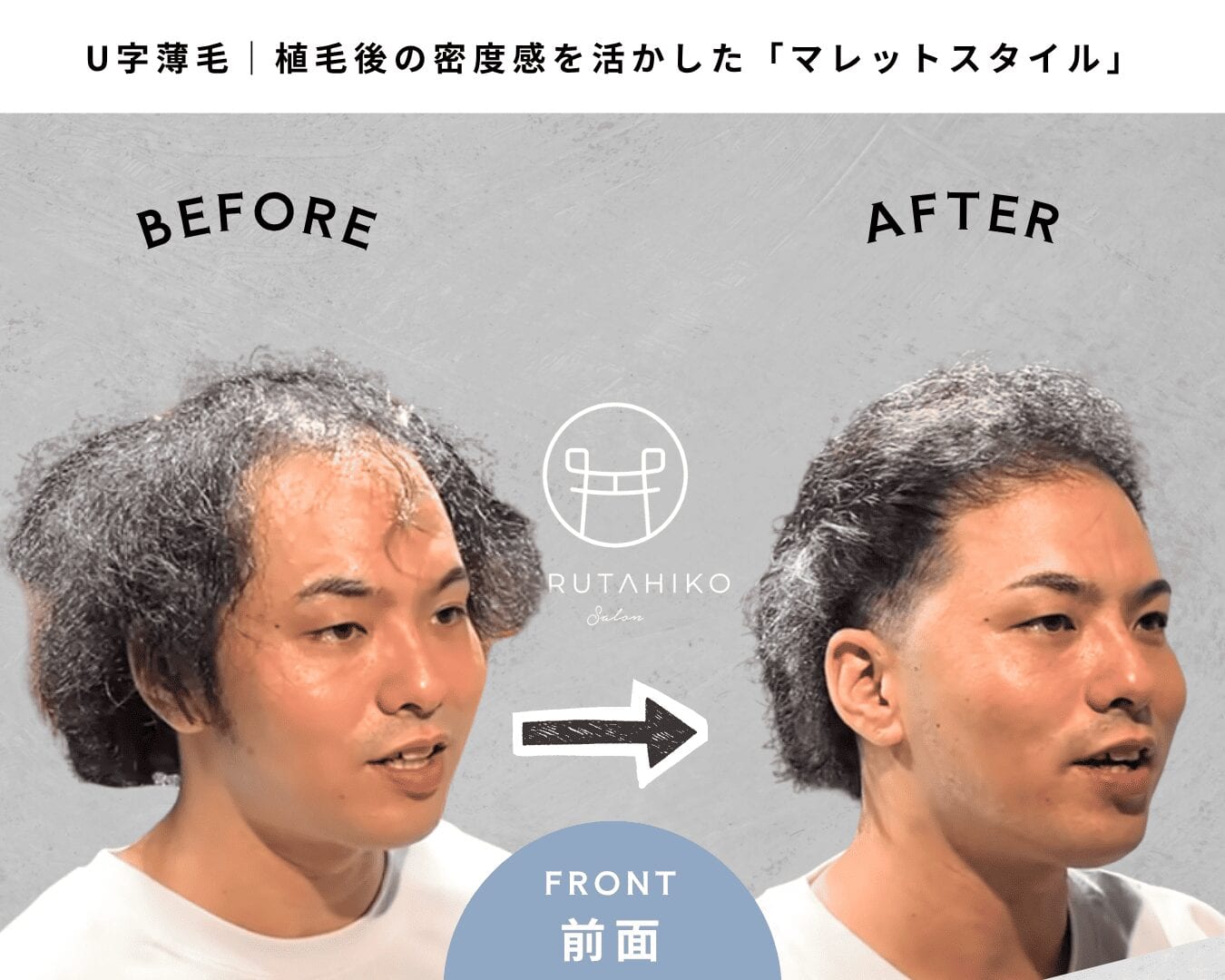
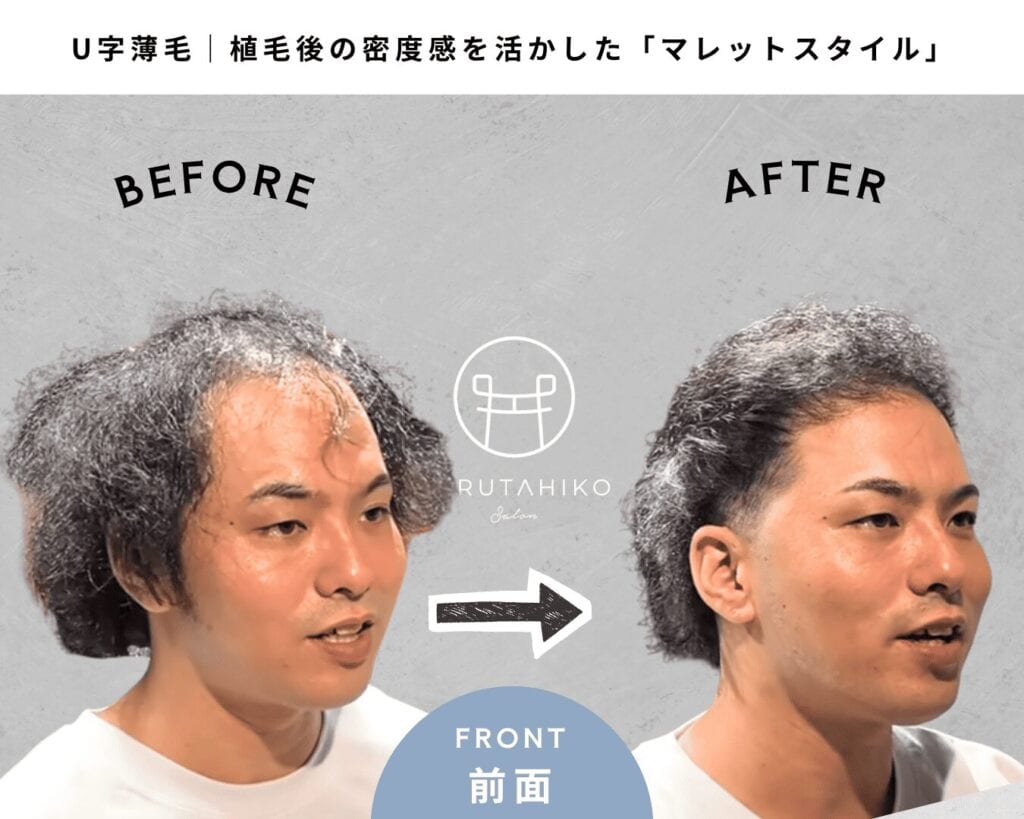
The style we chose is one that has become a major trend abroad:the mullet.
Leaving the fringe long to hide things only makes the gaps show when the wind blows or you sweat.Clipping the sides in, keeping weight in the fringe and leaving a moderate length at the nape — the mullet pulled the whole balance together at a stroke.
Four things we were careful about
- A light touch that puts no strain on the grafts:The fringe and the top are cut without pulling, with a fine touch.
- Clean sides to spread the eye:Bringing down the volume around the temples and above the ears sharpens the whole head.
- A wide fringe with weight in it:Setting the fringe wide and layering it over the shorter hairs gives a natural sense of density.
- A fine-foam shampoo, done properly:The scalp he had been too afraid to wash properly is cleaned gently, with lukewarm water and carefully judged pressure from the pads of the fingers.
The sides no longer puff out, and the whole thing reads as refined
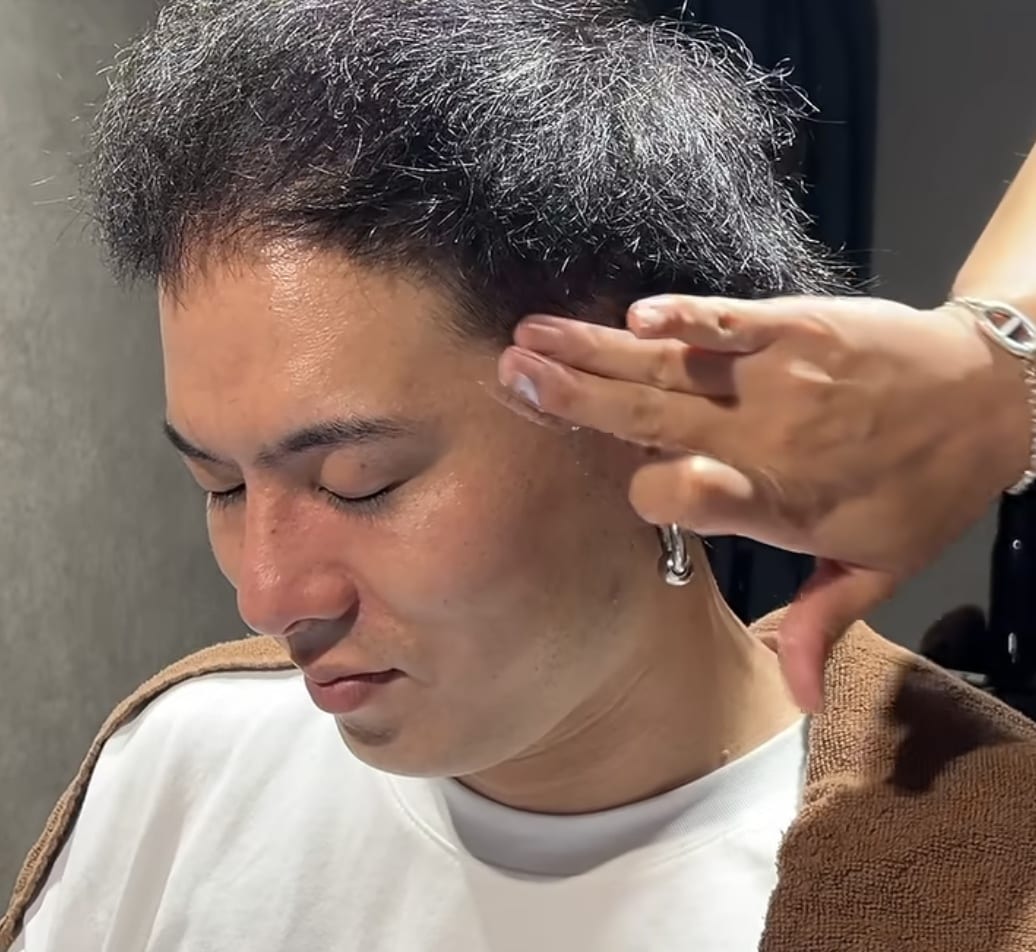
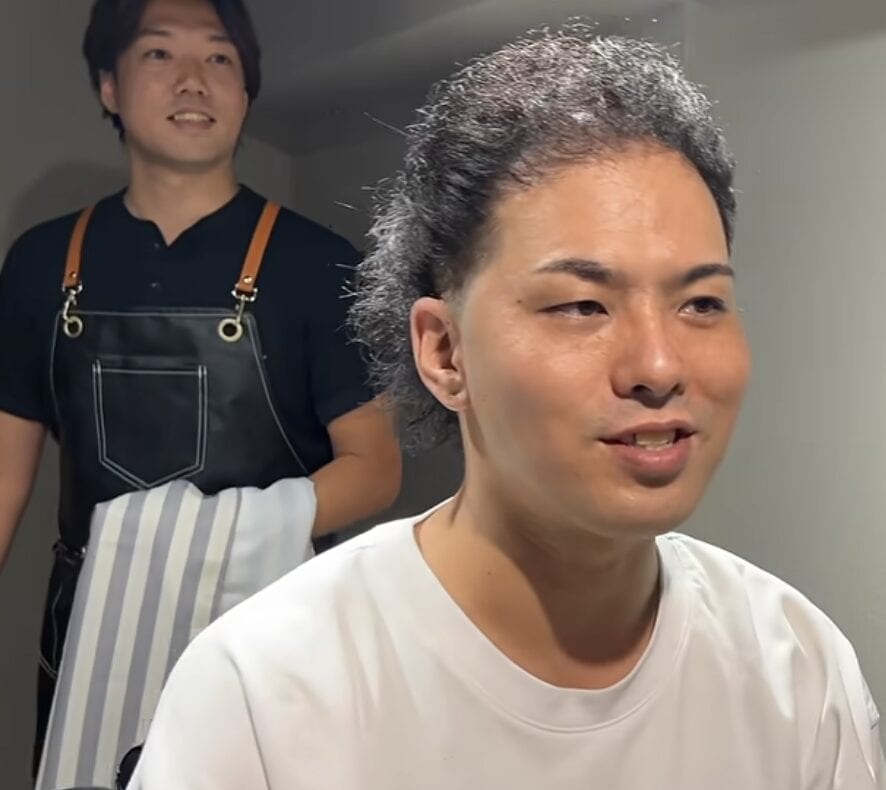
Looking at the finish, it is hard to believe this is a month after a transplant, with the hair still coming through — the change is considerable.
A transplant does not have to mean months of hiding under a hat until it grows in. Our job is to make the waiting look good too.
For styling we used something that adds no oil or weight to the scalp or the grafts:a powder-mist spray. Sprayed into the roots before drying, it gives lift and depth with no stickiness at all.
You can see the change — and his reaction to a proper shampoo for the first time in a month — in the video.
▼▼▼ Watch the video: "One month after a transplant, aged 34. Can a barbershop for thinning hair change it?"
It is one of our president's favorite channels — do subscribe.

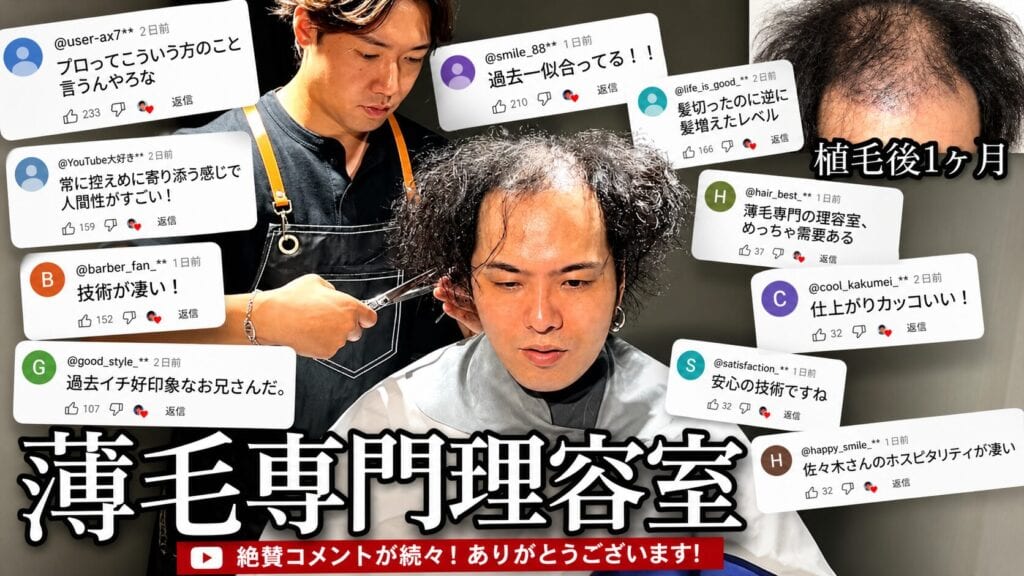
You do not have to give up on cuts and styling after a transplant
"What if the stylist asks about the transplant?"
"The graft area is not settled yet, so I am afraid to go for a cut."
Many people end up living in a cap because of worries like these. But poor ventilation and existing hair left to grow can make the scalp worse and look odder, not better.
What matters is scalp care suited to where you are after surgery, and a cut by someone who knows how transplanted hair grows.
At SARUTAHIKO, barbers who know transplants work in fully private rooms and build each cut around the person in front of them.
Five reasons people choose SARUTAHIKO
- Stylists who know transplants and thinning hair:Informed advice and a safe cut.
- A way of cutting that covers shock loss:A design worked out around density and flow, so the gaps do not show.
- Every seat in a private room:A space where your privacy is fully protected.
- Washing and styling that go easy on the scalp — and we show you how:We teach you how to shampoo and dry your hair safely at home.
- A plan that looks ahead to where you will be in one or two years:We stay with you through the process until the density settles.
Common questions about cuts and styles after a hair transplant
- How soon after a transplant can I have my hair cut at a barbershop or salon?
- As a rule, a cut is possible from about a month after surgery. This assumes your clinic has checked you over and cleared it. At one month the scabs come away and shock loss begins. We work around any redness and treat the scalp as the delicate thing it is.
- Can I have a short cut while shock loss is at its worst?
- Yes, a short cut is perfectly possible. Growing it out to hide things only makes the gap in density with the existing hair more obvious. Tightening the sides and back and adjusting the width and weight of the fringe gives a natural, clean design even during shock loss.
- I am worried the transplanted hair will come out during a cut or shampoo.
- Two weeks on from surgery the grafts have taken, so normal handling will not pull them out at the root. The scalp is still sensitive, though. We adjust the water pressure, the temperature and the pressure of our fingers, and wash and cut gently.
- I do not want other clients or staff to know I have had a transplant.
- You need not worry. Every seat at SARUTAHIKO is in a private room, by appointment only. During your appointment you are in your own room, away from other clients. In a space built around privacy, you can talk freely.